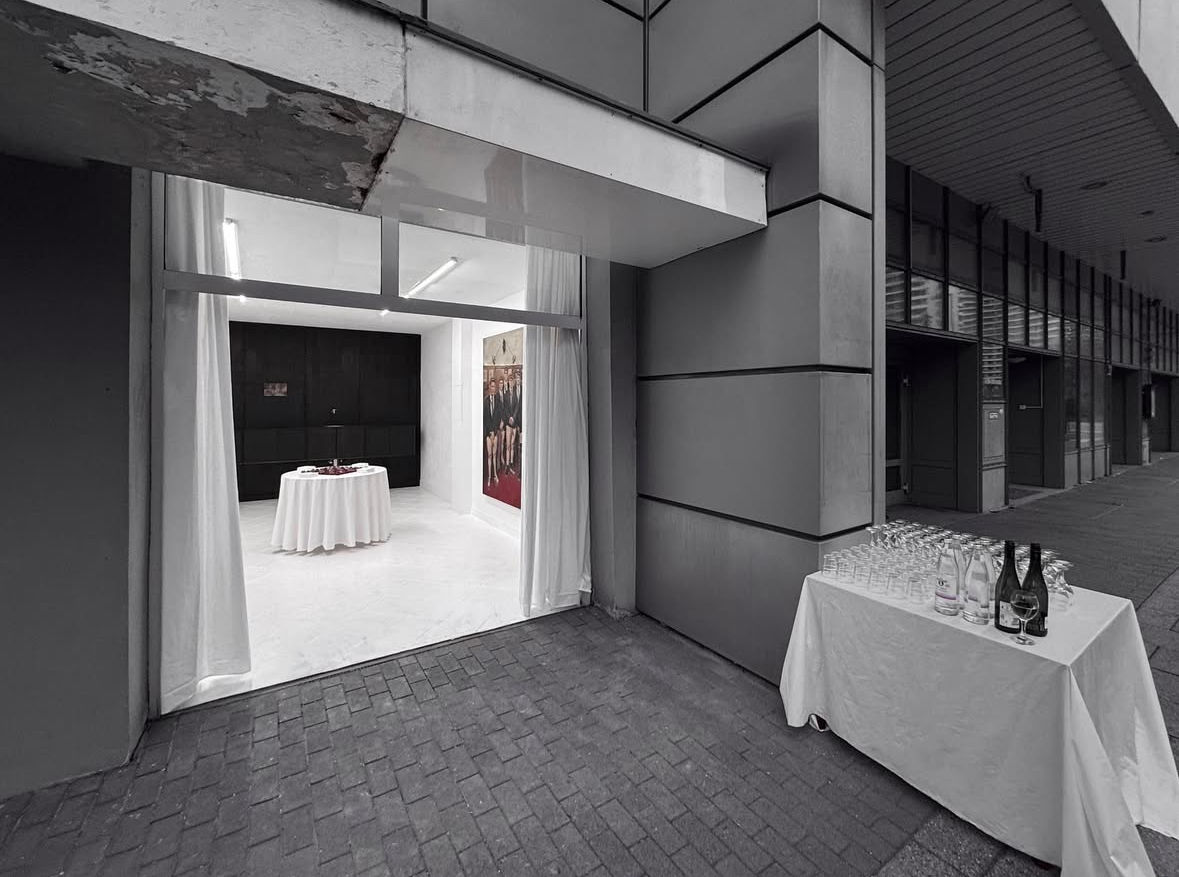
ons gallery is pleased to announce the first solo exhibition of Felix Giesen, “Melee”, opening on March 14, 2025, from 18:00 to 21:30 at Leipziger Straße 65, 10117 Berlin. The exhibition will be on view from March 18 to March 29, daily from 12:00 to 18:00. First solo show by Felix Giesen at ons gallery. curated by Elza Ozolite & Lukas Stöver
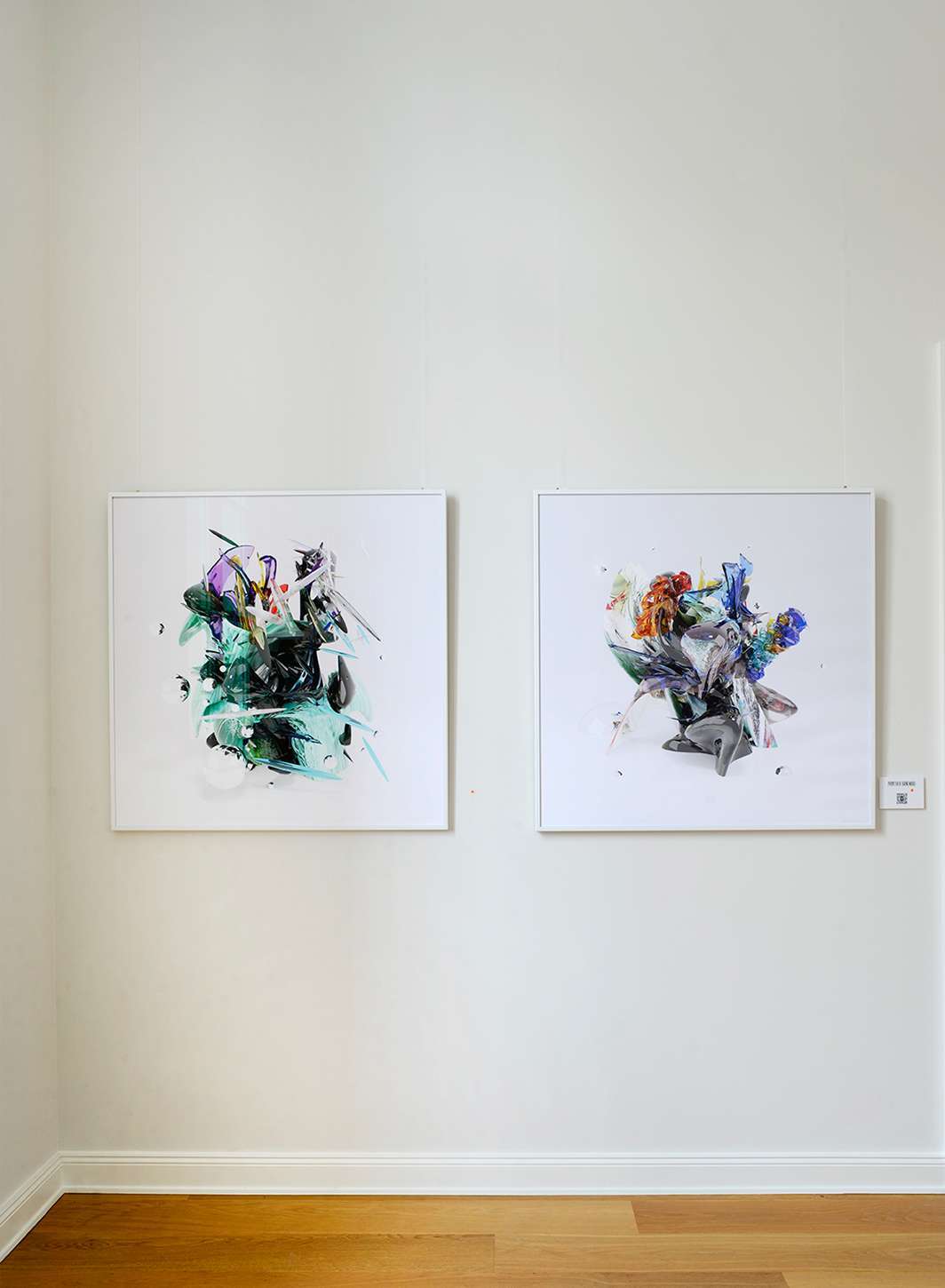
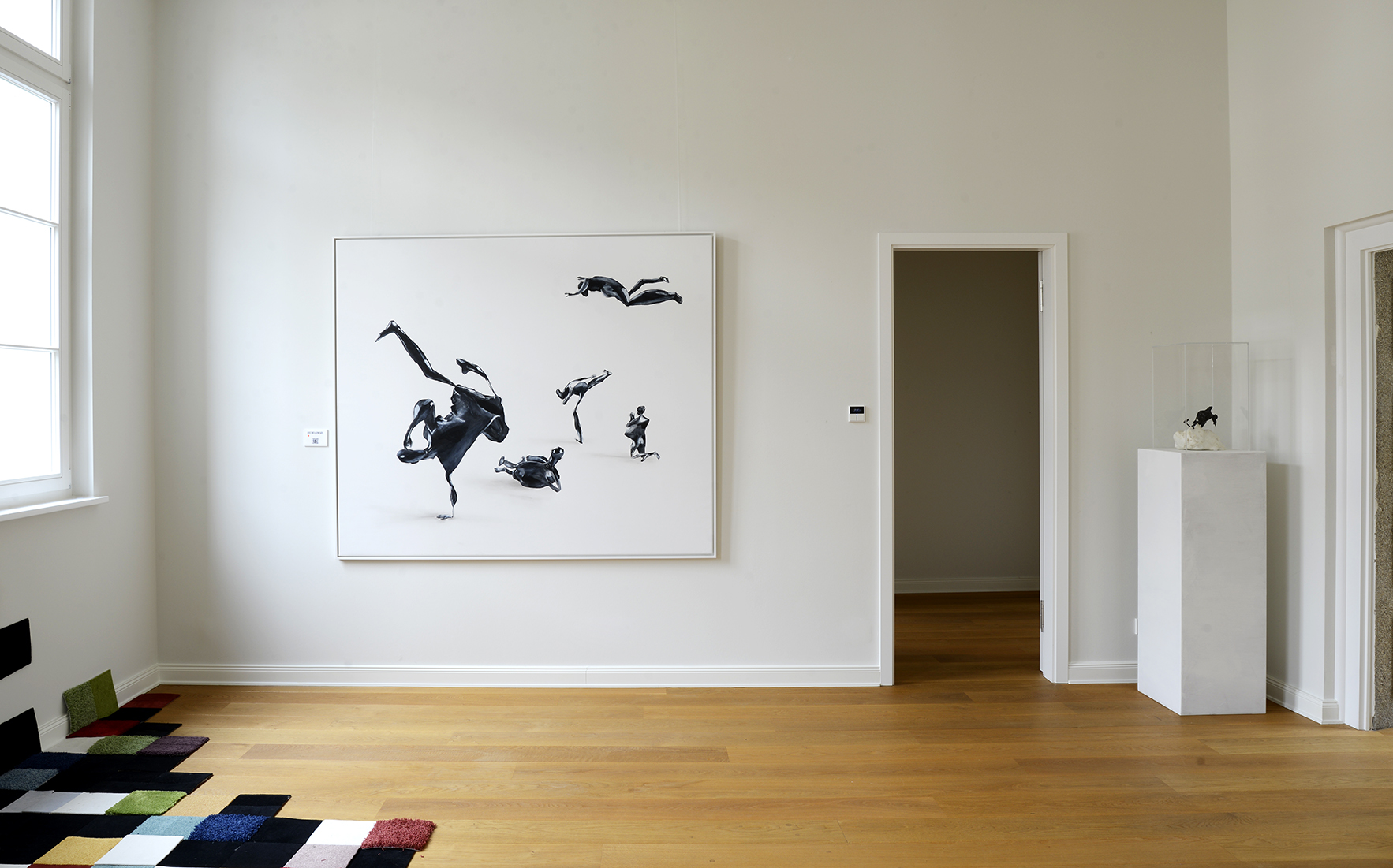
Düsseldorf‑based artist Felix Giesen primarily works with conventional visual arts media, expressing himself through painting and works on paper. Unlike his highly tactile oil paintings, however, his innovative digital artworks break out of the established framework.In the series Materiality Game, the artist creates digital artworks in extensions to abstract oil paintings or in the form of fully digital AR sculptures. These works find meaning within the interplay of materiality, reality, and our perception of reality.
Each work by Felix Giesen, both painting and digital sculpture, exists as an abstract artwork, reflecting a unique emotional state and opening an individual scope for interpretation. However, considering the working method and creative process that characterizes this series of works, one must understand Materiality Game as a complete body of work, which constantly moves between the digital and physical planes. By doing so, the artist questions the extent to which the physical and virtual worlds separate from one another and how they construct our present‑day reality
Each work by Felix Giesen, both painting and digital sculpture, exists as an abstract artwork, reflecting a unique emotional state and opening an individual scope for interpretation. However, considering the working method and creative process that characterizes this series of works, one must understand Materiality Game as a complete body of work, which constantly moves between the digital and physical planes. By doing so, the artist questions the extent to which the physical and virtual worlds separate from one another and how they construct our present‑day reality
About the Artist
Felix Giesen (b. 1999) emerged from the digital world, with a background in AI models, augmented reality, and virtual reality. Although his artistic journey began in digital art, where he explored technology’s potential to create immersive experiences, his recent engagement with painting led him to discover a passion for translating the digital world into analog form. For this exhibition, Giesen created self-trained AI models fed with his own photographs that combine themes of particular interest: dying German cultural phenomena, representations of masculinity within these cultures, and self-staged scenes.
Text by Nele Jackson
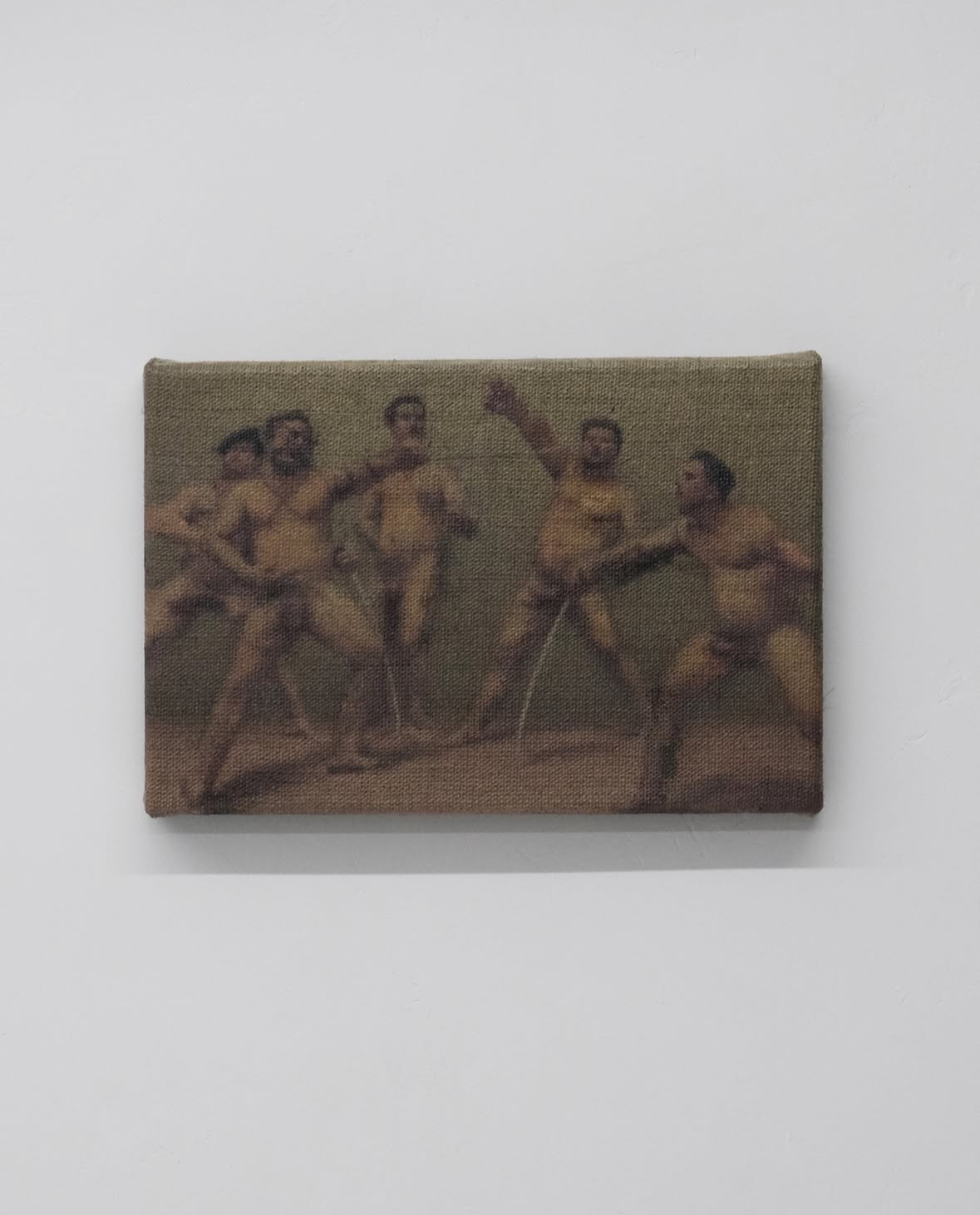
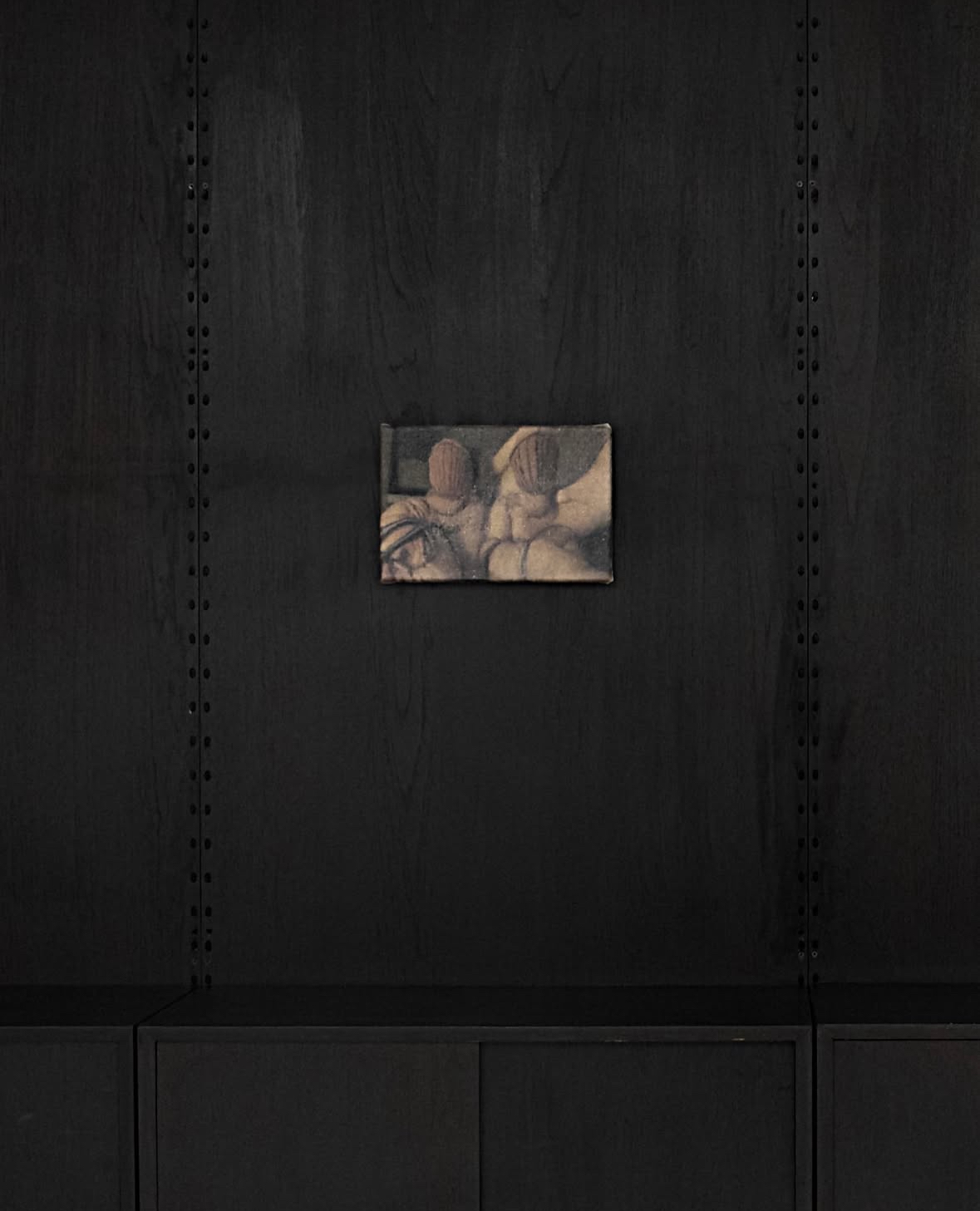
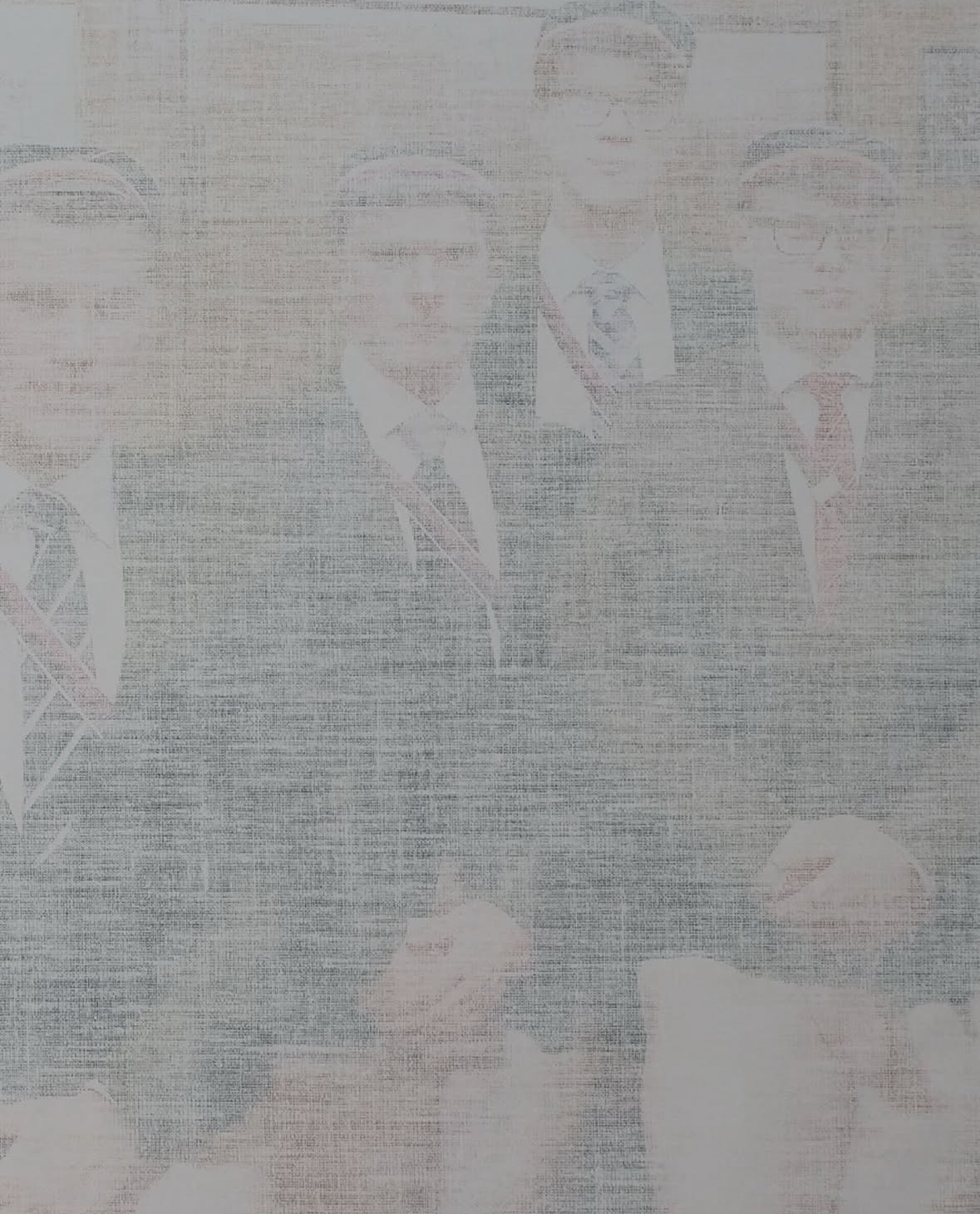
Testosterone levels in the Western world have been on a steady decline since the 1980s. Compared to your father at the same age, you have less grip strength, less sperm, and less friends. You wouldn’t necessarily deduce a crisis of masculinity from looking at the average guy’s Instagram feed: a wealth of resources on muscle building, combat sports, organ meat consumption, identifying “high value women”, and the like. On second thought though, it all makes sense. Fear and obsession are often two sides of the same coin, like pedophile hunting and barely-legal porn. As your dick grows softer, you have to pretend harder. Pretending to have answers is young men’s biggest imperative today. Amidst their uncertainty, unfulfilled longing, and hurt feelings, they seek out ideologies that project unwavering certainty: reactionism, conservatism, historicism. After all, nothing is more certain than the past. As a result, the political gender gap widens like a fault line: while young women drift left, young men drift right. Both get lonelier, more stuck, more insane.Yet some young men are pretending so hard you start to feel bad for them. The Düsseldorf fraternity Rhenania Salinga displays its white-red-black banners with ceremonial pride. A recent addition to their home decor is a hand-painted flag reading “Frat Lives Matter” — as tone-deaf as it is behind schedule. Like most remaining Burschenschaften, Rhenania Salinga is an island of anachronism in a sea of ambiguity. A place where you can drink beer with your boys, blow off steam fencing, and “think critically” about climate change. A refuge for lonely young men attempting to metabolize manhood through archaic ritual, seeking to understand the modern world through the same discolored lens.Artist Felix Giesen decides to engage with this subject through active infiltration rather than passive study. Using deepfake technology and self-trained AI models, Giesen has reimagined images from the archives of these fraternities and transplanted his face onto those of the members. The exhibition’s centerpiece presents the frat brothers in their signature dark suits and caps, standing proudly with their pants around their ankles. Just a bunch of dicks, essentially, wearing the artist’s face in varied expressions of pride and belonging. Giesen maps the strange magnetism of backward-facing certainty not from a distance but from within. By inhabiting these spaces and bodies himself, he implicates himself in the questions he raises:
What parts of masculinity are performance, and what parts are inescapable?
Where is the line between distance and identification?
And what shall we do about young men?The technical process mirrors this conceptual tension. The digital manipulations are transferred to coarse brown linen through UV printing, creating a compromised translation from pixel to physical matter. The deliberately chosen brown fabric carries its own political weight — a dirty color signifying a corrosive fetish for tradition. Fraternities like Rhenania Salinga offer young men coordinates to the chaos of their inner world: Stand here. Wear this. Drink thus. The tragedy isn’t the existence of such institutions, but their direction — compasses calibrated to continents already submerged by time. The past is a different, high-T country. The present is a lonely, confusing place, run and ruined by little nerds who just want to make their daddy proud.
Felix Giesen (b. 1999) emerged from the digital world, with a background in AI models, augmented reality, and virtual reality. Although his artistic journey began in digital art, where he explored technology’s potential to create immersive experiences, his recent engagement with painting led him to discover a passion for translating the digital world into analog form. For this exhibition, Giesen created self-trained AI models fed with his own photographs that combine themes of particular interest: dying German cultural phenomena, representations of masculinity within these cultures, and self-staged scenes.
Text by Nele Jackson
Testosterone levels in the Western world have been on a steady decline since the 1980s. Compared to your father at the same age, you have less grip strength, less sperm, and less friends. You wouldn’t necessarily deduce a crisis of masculinity from looking at the average guy’s Instagram feed: a wealth of resources on muscle building, combat sports, organ meat consumption, identifying “high value women”, and the like. On second thought though, it all makes sense. Fear and obsession are often two sides of the same coin, like pedophile hunting and barely-legal porn. As your dick grows softer, you have to pretend harder. Pretending to have answers is young men’s biggest imperative today. Amidst their uncertainty, unfulfilled longing, and hurt feelings, they seek out ideologies that project unwavering certainty: reactionism, conservatism, historicism. After all, nothing is more certain than the past. As a result, the political gender gap widens like a fault line: while young women drift left, young men drift right. Both get lonelier, more stuck, more insane.Yet some young men are pretending so hard you start to feel bad for them. The Düsseldorf fraternity Rhenania Salinga displays its white-red-black banners with ceremonial pride. A recent addition to their home decor is a hand-painted flag reading “Frat Lives Matter” — as tone-deaf as it is behind schedule. Like most remaining Burschenschaften, Rhenania Salinga is an island of anachronism in a sea of ambiguity. A place where you can drink beer with your boys, blow off steam fencing, and “think critically” about climate change. A refuge for lonely young men attempting to metabolize manhood through archaic ritual, seeking to understand the modern world through the same discolored lens.Artist Felix Giesen decides to engage with this subject through active infiltration rather than passive study. Using deepfake technology and self-trained AI models, Giesen has reimagined images from the archives of these fraternities and transplanted his face onto those of the members. The exhibition’s centerpiece presents the frat brothers in their signature dark suits and caps, standing proudly with their pants around their ankles. Just a bunch of dicks, essentially, wearing the artist’s face in varied expressions of pride and belonging. Giesen maps the strange magnetism of backward-facing certainty not from a distance but from within. By inhabiting these spaces and bodies himself, he implicates himself in the questions he raises:
What parts of masculinity are performance, and what parts are inescapable?
Where is the line between distance and identification?
And what shall we do about young men?The technical process mirrors this conceptual tension. The digital manipulations are transferred to coarse brown linen through UV printing, creating a compromised translation from pixel to physical matter. The deliberately chosen brown fabric carries its own political weight — a dirty color signifying a corrosive fetish for tradition. Fraternities like Rhenania Salinga offer young men coordinates to the chaos of their inner world: Stand here. Wear this. Drink thus. The tragedy isn’t the existence of such institutions, but their direction — compasses calibrated to continents already submerged by time. The past is a different, high-T country. The present is a lonely, confusing place, run and ruined by little nerds who just want to make their daddy proud.


.webp)
My work "Parzelle 4":


Giesen always makes sure to choose an approach as natural as possible to link the physical and digital world inextricably from the beginning of his work when creating a digital sculpture. The basic shape of the three‑dimensional object file the artwork is based on is firsthand sculpted on the touchscreen and then modeled in mid‑air with the help of virtual reality goggles. For this purpose, the artist processes each part of the sculpture by bending and reshaping it directly with his hands, like it is done with sculptures made of wax or clay. With the help of the goggles, the model functions like a tangible object that can move throughout the room. A hand‑formed work of art on the virtual plane is created.

Trailer - Hybrid Nature
In Zeiten von Konflikten und fortwährenden ökonomischen und ökologischen Krisen ist die Natur ein wichtiger Sehnsuchtsort für die Menschen. Immer mehr belebt sie auch digitale Landschaften, ob als AR- oder XR-Anwendung oder im Metaversum, oft idealisiert und ästhetisch zugespitzt. Theoretiker*innen wie Timothy Morton oder Donna Haraway distanzieren sich von Vorstellungen von der Natur als etwas Ursprünglichem und denken sie als kulturell, historisch, technologisch geformt. Ist Natur denkbar ohne den Menschen, ohne Technologie und Digitalisierung? Leben wir bereits in postnatürlichen Zeiten? Deutlich wird: Natur ist emotional aufgeladen und vielfältig. Die ausgewählten AR-Arbeiten machen die Schnittstellen physischer und digitaler Welten sichtbar. Sie hinterfragen unser Verständnis davon, was Natur und was Kultur ist, in welcher Beziehung sie zueinanderstehen, und ob sie sich überhaupt trennen lassen.
Augmented Reality ist keine technische Spielerei; die Arbeiten dieser Biennale fordern die Besuchenden heraus und entwerfen produktive Ideen für eine Zukunft, die außerhalb der eigenen Vorstellungskraft liegt.
Augmented Reality ist keine technische Spielerei; die Arbeiten dieser Biennale fordern die Besuchenden heraus und entwerfen produktive Ideen für eine Zukunft, die außerhalb der eigenen Vorstellungskraft liegt.