Schöne Ordnung
Exhibition
View Live Version
Schöne Ordnung
Name
Schöne Ordnung
Year
2026
Scope of Work
Schießbude
Location
Nordpark, Ballhaus
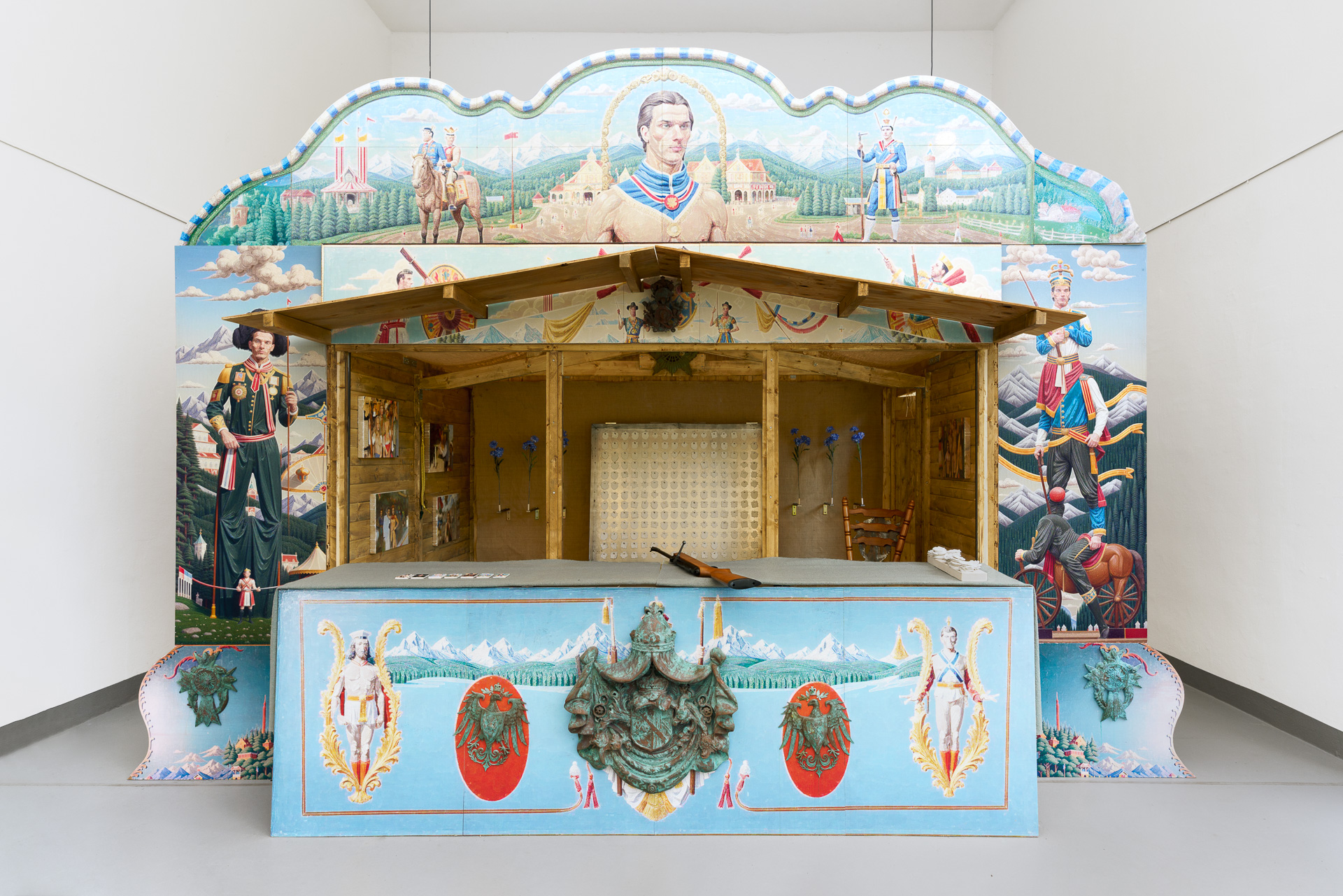
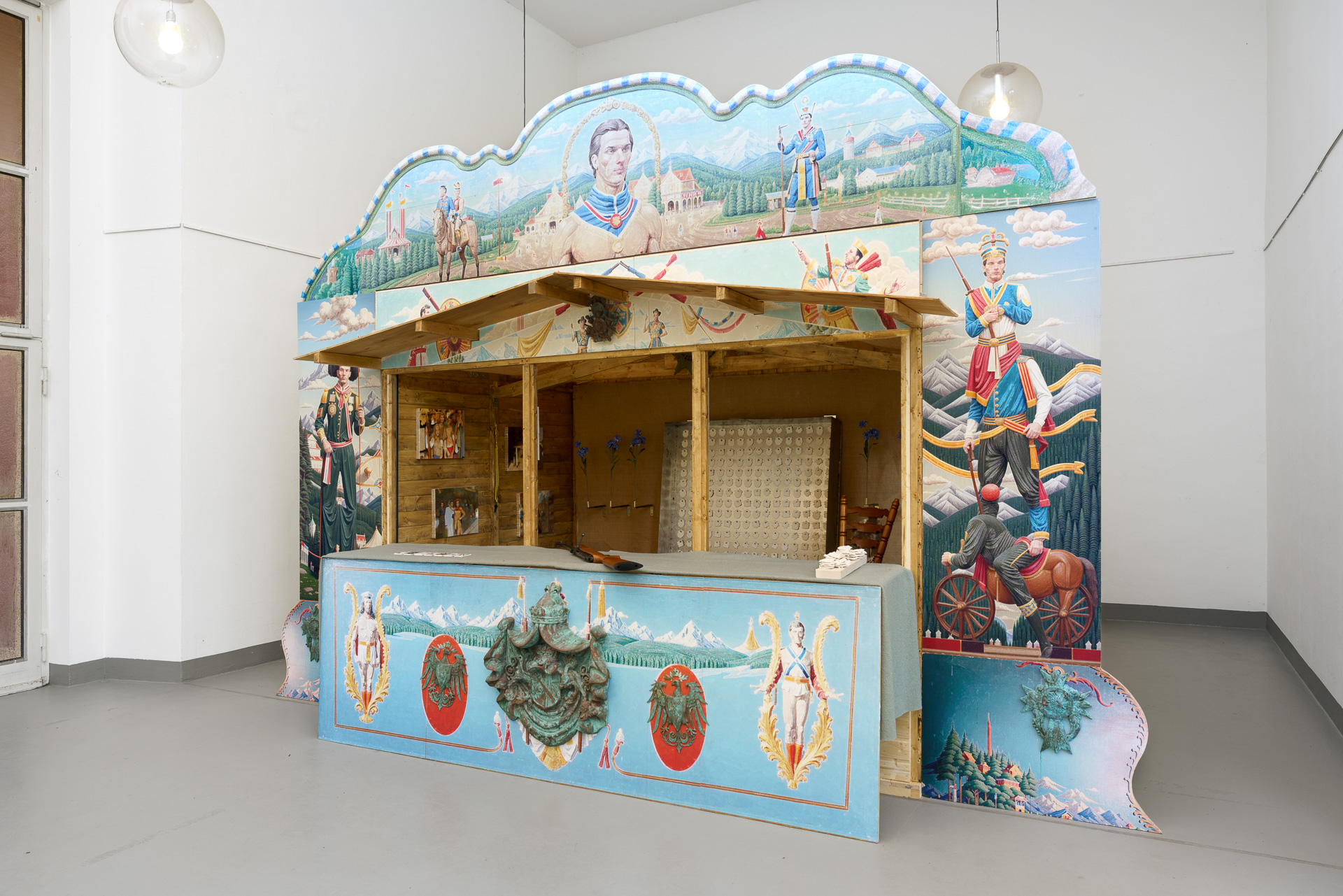
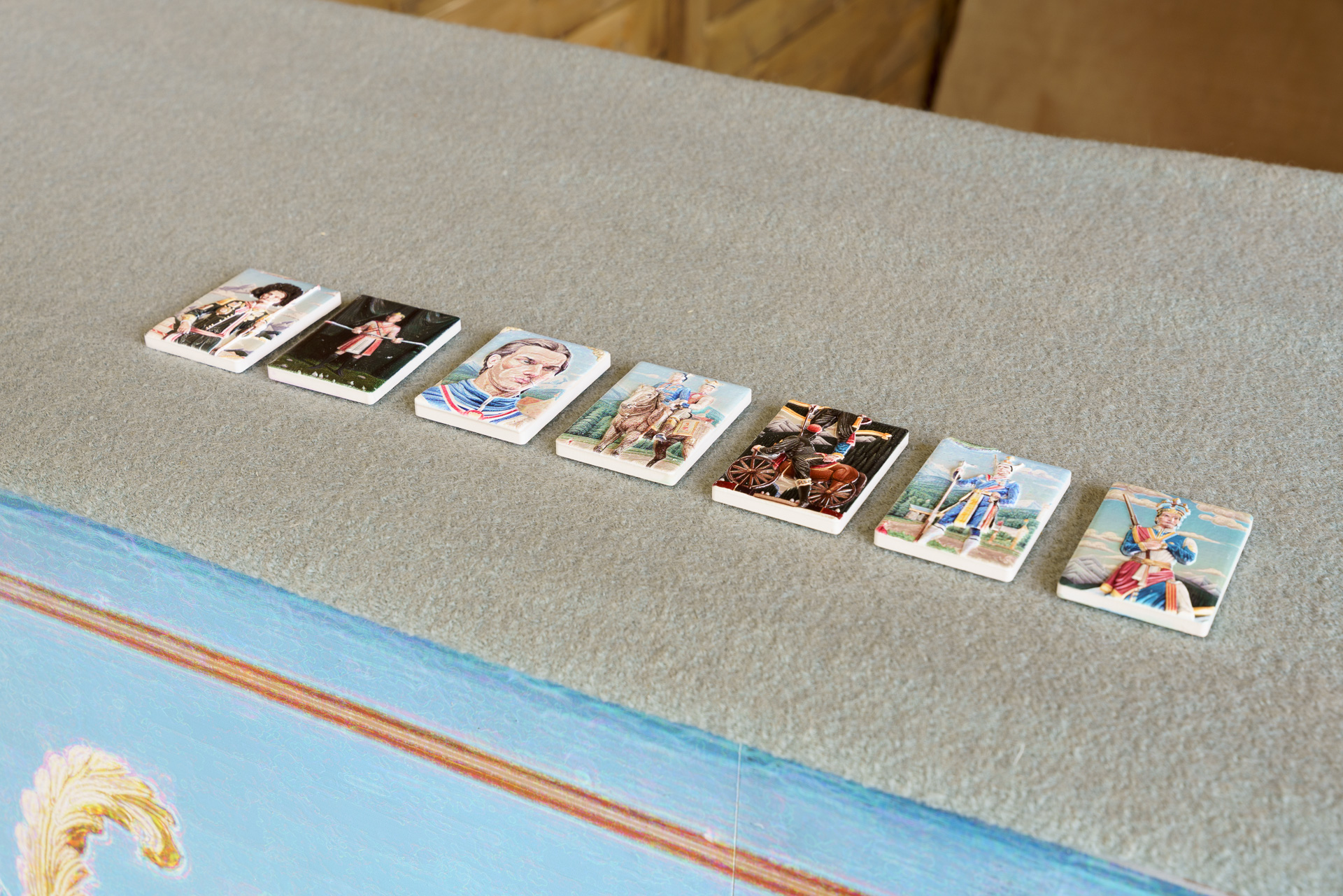
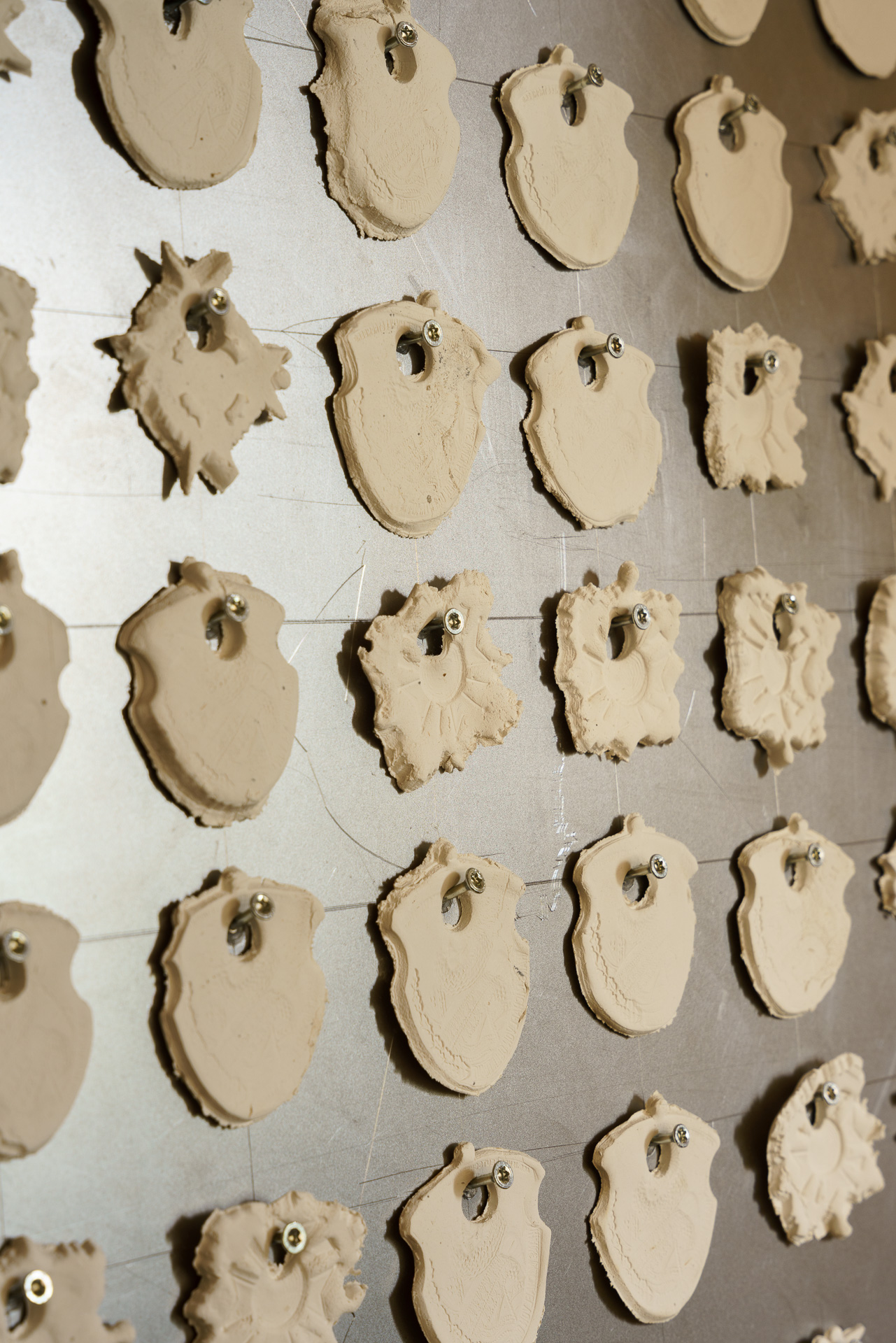
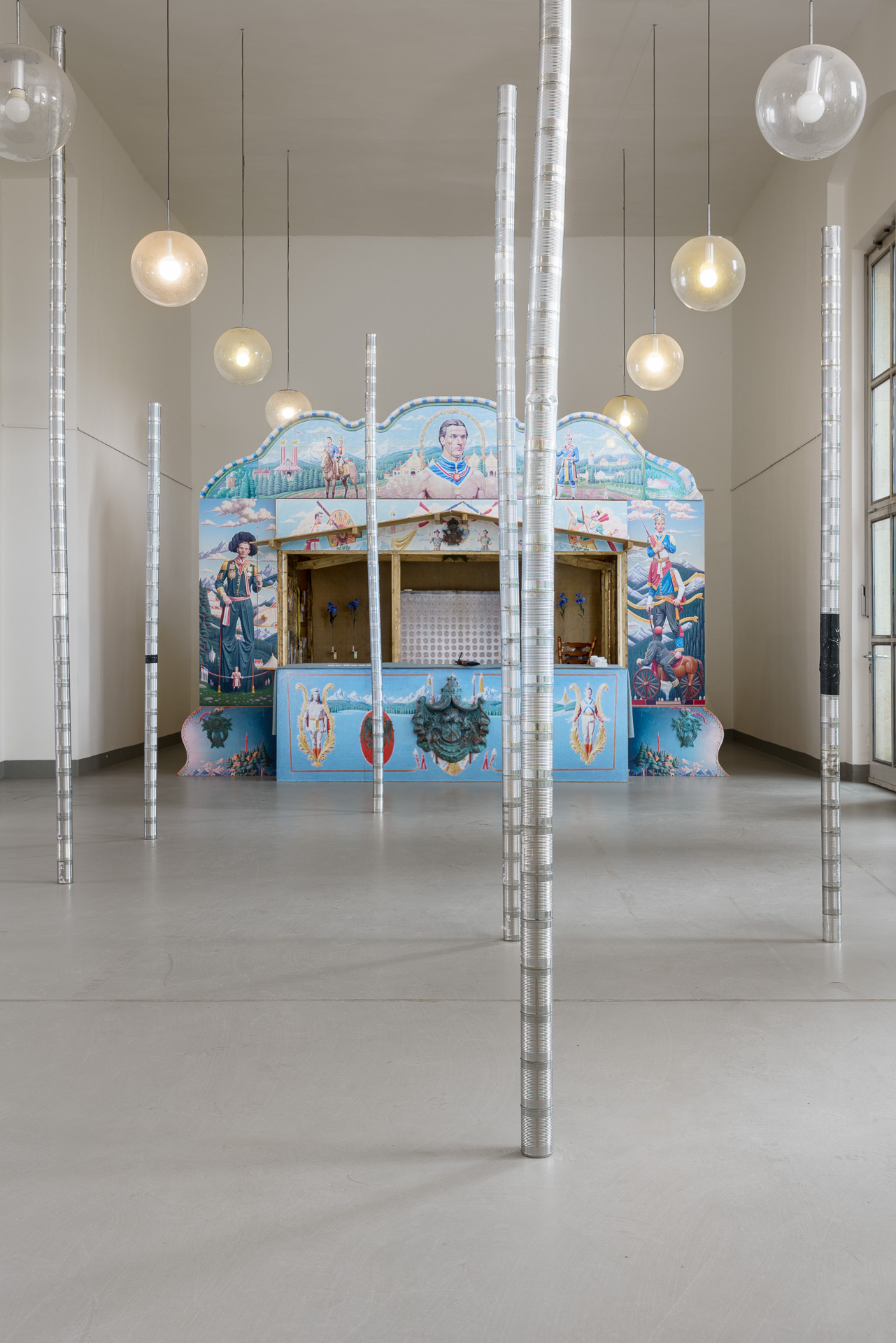
For *Schöne Ordnung*, Felix Giesen transforms the Ballhaus into the site of a functioning shooting gallery. Built and painted by hand, and combining oil painting, UV printing, sculptural elements and 3D printing, the installation draws on the visual language of German funfairs, shooting clubs and folk festivals. Rather than representing these traditions from a distance, Giesen reconstructs one of their familiar social structures and invites visitors to enter it. The work can be used. Visitors take the rifle, aim and shoot. A successful hit is rewarded with a 3D-printed fridge magnet depicting a figure in traditional dress. Through this simple exchange, *Schießbude* establishes its own temporary system of performance and reward: there are targets, rules, winners and objects that certify participation. What initially appears as entertainment becomes a small social apparatus in which recognition and belonging are produced through action. This mechanism is particularly charged within the historical context of Nordpark. Built around the 1937 *Reichsausstellung Schaffendes Volk*, the park was conceived as a place in which leisure, spectacle and collective experience contributed to a larger ideological construction of community. Giesen does not reproduce this ideology or designate a political enemy as the target. Instead, he isolates a more ambiguous mechanism that can persist independently of explicit political content: the pleasure of taking part. The shooting gallery therefore operates between attraction and unease. Its imagery, craftsmanship and familiarity make participation seductive, while the act of shooting gradually implicates the visitor in the structure being examined. Critical distance is not established beforehand; reflection emerges through participation itself. The work asks how quickly play can produce temporary communities, hierarchies and forms of identification — and whether the mechanisms through which people experience belonging can ever be separated entirely from those through which others are excluded.
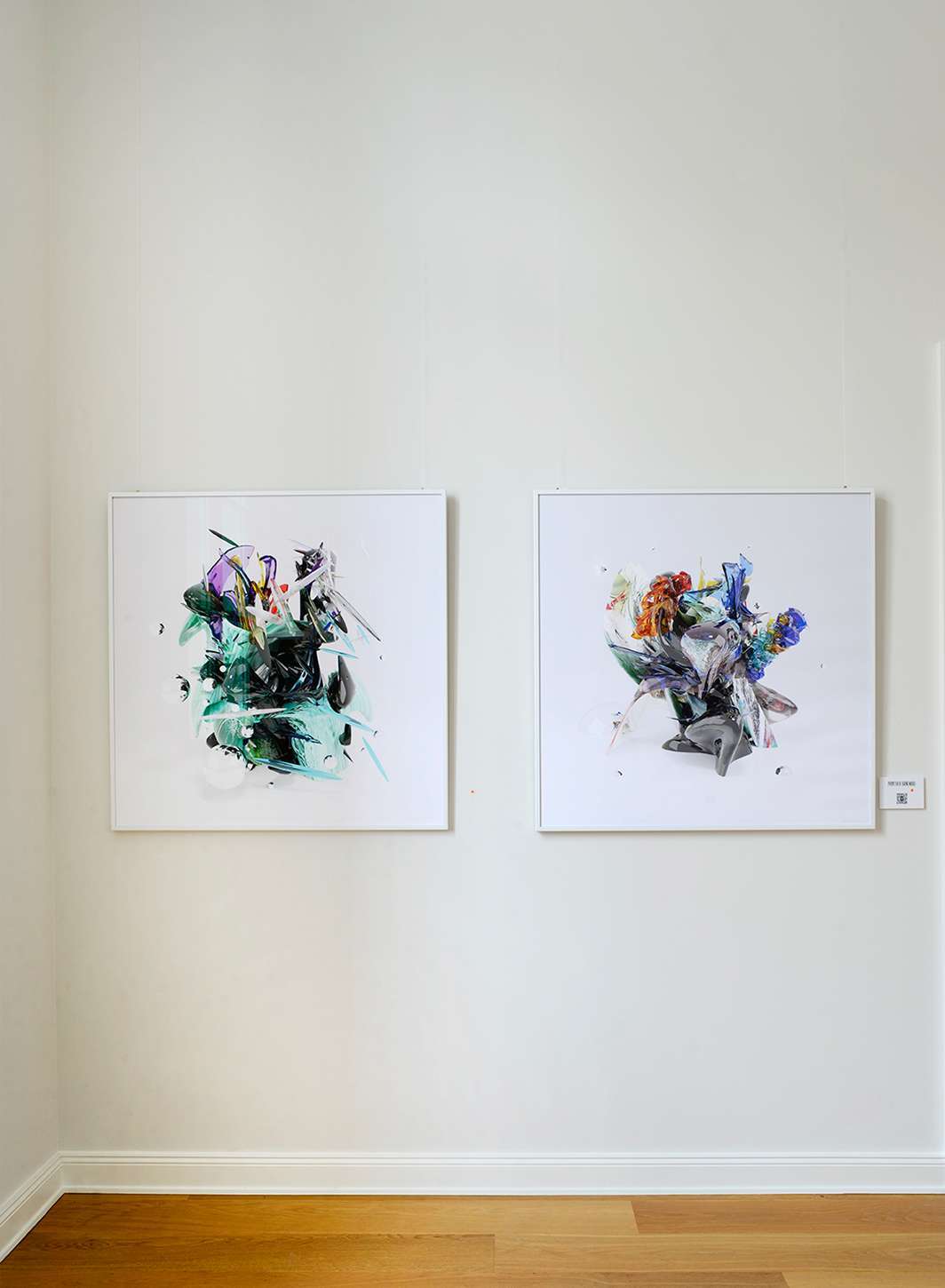
Düsseldorf‑based artist Felix Giesen primarily works with conventional visual arts media, expressing himself through painting and works on paper. Unlike his highly tactile oil paintings, however, his innovative digital artworks break out of the established framework.In the series Materiality Game, the artist creates digital artworks in extensions to abstract oil paintings or in the form of fully digital AR sculptures. These works find meaning within the interplay of materiality, reality, and our perception of reality.
Each work by Felix Giesen, both painting and digital sculpture, exists as an abstract artwork, reflecting a unique emotional state and opening an individual scope for interpretation. However, considering the working method and creative process that characterizes this series of works, one must understand Materiality Game as a complete body of work, which constantly moves between the digital and physical planes. By doing so, the artist questions the extent to which the physical and virtual worlds separate from one another and how they construct our present‑day reality
Each work by Felix Giesen, both painting and digital sculpture, exists as an abstract artwork, reflecting a unique emotional state and opening an individual scope for interpretation. However, considering the working method and creative process that characterizes this series of works, one must understand Materiality Game as a complete body of work, which constantly moves between the digital and physical planes. By doing so, the artist questions the extent to which the physical and virtual worlds separate from one another and how they construct our present‑day reality


.webp)
My work "Parzelle 4":


Giesen always makes sure to choose an approach as natural as possible to link the physical and digital world inextricably from the beginning of his work when creating a digital sculpture. The basic shape of the three‑dimensional object file the artwork is based on is firsthand sculpted on the touchscreen and then modeled in mid‑air with the help of virtual reality goggles. For this purpose, the artist processes each part of the sculpture by bending and reshaping it directly with his hands, like it is done with sculptures made of wax or clay. With the help of the goggles, the model functions like a tangible object that can move throughout the room. A hand‑formed work of art on the virtual plane is created.

Trailer - Hybrid Nature
In Zeiten von Konflikten und fortwährenden ökonomischen und ökologischen Krisen ist die Natur ein wichtiger Sehnsuchtsort für die Menschen. Immer mehr belebt sie auch digitale Landschaften, ob als AR- oder XR-Anwendung oder im Metaversum, oft idealisiert und ästhetisch zugespitzt. Theoretiker*innen wie Timothy Morton oder Donna Haraway distanzieren sich von Vorstellungen von der Natur als etwas Ursprünglichem und denken sie als kulturell, historisch, technologisch geformt. Ist Natur denkbar ohne den Menschen, ohne Technologie und Digitalisierung? Leben wir bereits in postnatürlichen Zeiten? Deutlich wird: Natur ist emotional aufgeladen und vielfältig. Die ausgewählten AR-Arbeiten machen die Schnittstellen physischer und digitaler Welten sichtbar. Sie hinterfragen unser Verständnis davon, was Natur und was Kultur ist, in welcher Beziehung sie zueinanderstehen, und ob sie sich überhaupt trennen lassen.
Augmented Reality ist keine technische Spielerei; die Arbeiten dieser Biennale fordern die Besuchenden heraus und entwerfen produktive Ideen für eine Zukunft, die außerhalb der eigenen Vorstellungskraft liegt.
Augmented Reality ist keine technische Spielerei; die Arbeiten dieser Biennale fordern die Besuchenden heraus und entwerfen produktive Ideen für eine Zukunft, die außerhalb der eigenen Vorstellungskraft liegt.